Feedback while it still matters
Feedback only does its job while there's still time to act on it. Held past that point, the cost doesn't disappear. It lands on the person who finds out later than they should have.
By JP LeBlanc
core0–150+ engineersAlso a Playbook →
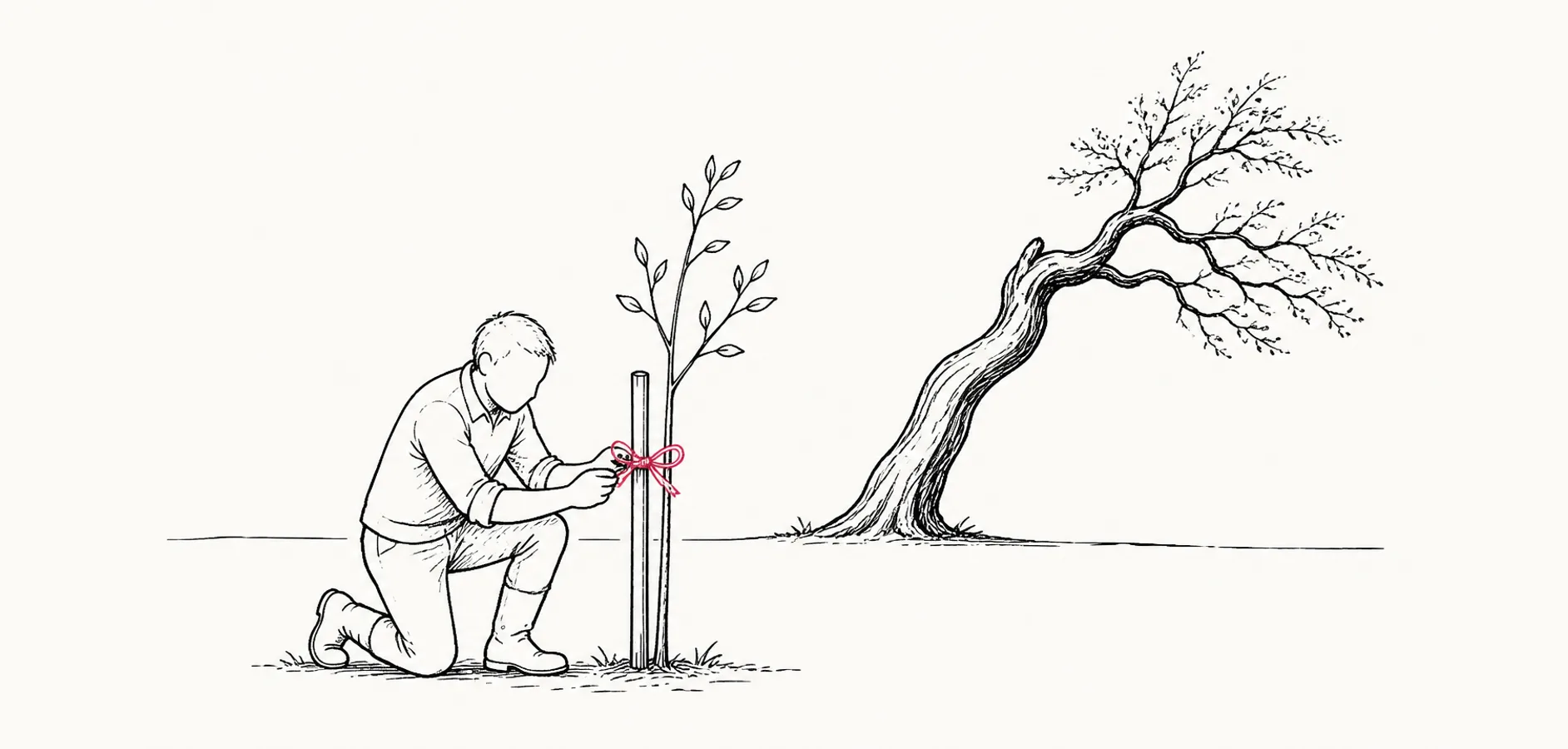
Someone on your team runs fifteen minutes over in every standup they lead. You notice it week one. If you mention it at all, it's eight months later, in a review, filed under "communication," next to a sentence you spent longer wording than the problem deserved. By then it's happened maybe thirty times, the team has quietly rearranged its own calendars around it and nobody told you that either, and the feedback, when it finally shows up, isn't information anymore.
It's an ambush wearing a form.
Feedback has one job: tell someone what's working, what isn't, and how what they're doing is actually landing on the people around them. It only does that job while the behavior's still fresh enough to change and while enough goodwill is left to hear it. Anything that looks like feedback but arrives on a cycle, softened into a template, saved for a better moment, is doing a different job, usually protecting the manager rather than helping the person.
The cost doesn't vanish, it moves
Holding back a hard note feels compassionate in the moment. You're sparing someone an awkward conversation. Protecting a good week. Waiting for the right opening. Which, if you're honest, never quite arrives on its own. What you're actually doing, underneath all of that, is pushing the cost forward, onto a harder conversation and a person with less time left to do anything about it. That awkwardness didn't go anywhere. Just sat there compounding the whole time you weren't saying it.
I used to think saving a difficult note for the official moment was the more careful, more managerial way to handle it.
It reads that way on paper. It isn't. You get the credit for restraint, and the other person pays for it later, in a room that's suddenly about a whole year instead of one Tuesday.
Situation, behavior, impact
There's a simple three-part move (situation, behavior, impact) that keeps feedback from turning into either an ambush or a vague feeling nobody can quite pin down, and it works best said close to the event.
Start with the situation, specifically, not "you always" or "lately," which just invite an argument about whether that's even true. This morning's standup. The review on Thursday at 2pm. Then the behavior itself, described the way a camera would've caught it rather than the way you'd summarize a person's character: "you cut Sam off twice" is a behavior you can point to, "you weren't listening" is a verdict, and the only thing anyone can do with a verdict is defend against it. Then the impact, what actually happened because of it, to the work, to the team, to the meeting that ran long enough that two people missed their next call.
Most people skip the part that comes next, because the first three already feel like the whole job: saying plainly what you'd want different, then asking what they'd add. New context can absolutely change how you read the situation. It shouldn't make the impact disappear. Someone explaining why they cut Sam off doesn't undo the fact that Sam got cut off. It just adds a reason, which is useful, and separate.
This is really the everyday version of the hard conversation. A single occurrence doesn't earn a capital-C Conversation where you sit someone down and call out a pattern. It earns one sentence, said close to the event, in the moment or the next one-to-one. Do that consistently and you need a lot fewer of the other kind, because most things that would've become patterns get corrected the first time instead of getting the chance to become a second.
Care isn't the absence of accountability
There's a version of "caring leadership" that basically means being nice all the time. Avoiding conflict. Quietly lowering the bar for someone who's struggling. Protecting people from every uncomfortable moment. It's a common read of what care looks like, and it's wrong, so it's worth being specific about why. Sometimes the most caring thing available is telling someone plainly they're falling short, letting them sit with a hard problem instead of quietly taking it back, holding them to a commitment they'd rather renegotiate after the fact.
Care changes how you do that, not whether.
You're clear about what needs to change, you ask what support they need to get there, and you actually follow through on providing it. None of that requires making someone feel small. If your feedback is landing that way, that's a delivery problem, not proof the standard was too high. Ownership works the same way everywhere else in how I think about running a team: it's binary, and blame isn't. Holding someone to a clear bar isn't the opposite of caring about them. Refusing to tell them where the bar actually is, is.
Recognition runs on the same clock
Say the hard thing quickly. Same rule applies to the good thing, and somehow that half gets skipped almost as often.
It's easy to notice good judgment in the moment and file it away for the next formal cycle instead of saying it right there, on the spot. That's a mistake in both directions, it costs the person the reinforcement while the decision's still fresh enough to feel like theirs, and it teaches everyone watching that recognition is a scheduled event instead of something that happens because of what they actually did that week. Recognition given immediately, tied to the actual decision, does something a review never can: it tells someone their judgment was right while they still remember making the call.
Ask for it back
The part of this people skip most is asking whether they're any good at it themselves.
Ask the people who report to you what's working about how you lead, and what isn't (not once, as a gesture toward openness, but regularly, as a habit). And when something changes because of what they told you, say so, out loud, so the loop is visible instead of assumed.
Most managers give feedback constantly and take almost none of it, which quietly teaches a team that feedback flows one direction only. Strange thing to model, given the whole point here is that feedback works best moving toward whoever can still do something with it. You're one of those people too.
None of this replaces the continuous conversation a good one-to-one already is. It's the discipline that makes that conversation actually contain what it's supposed to. Nothing material in a formal review should be news to anyone. If it is, the failure happened months earlier, at the exact moment someone decided the timing wasn't quite right, and it usually happened to someone who meant well.
SBI reads clean on the page. In the room, I don't always get it right, not close. I've nailed the situation and the behavior and still fumbled the impact, or said the true thing in a tone that undid most of what I meant by it. The framework doesn't make any of this easy. Just possible, on a Tuesday, instead of in March.
A former colleague at CircleCI put a lot of this into a leadership guide years ago, and I still borrow from it.
Read this if
- When should I give feedback
- Feedback vs waiting for the review
- Situation behavior impact framework
- I've been sitting on this feedback