I'm JP LeBlanc. tinycto is what I've got to show for it.
I've spent twenty-five years running engineering orgs, and I'm SVP Engineering at Ada now. tinycto is everything I learned the expensive way, written down so you don't have to pay full price for it too.
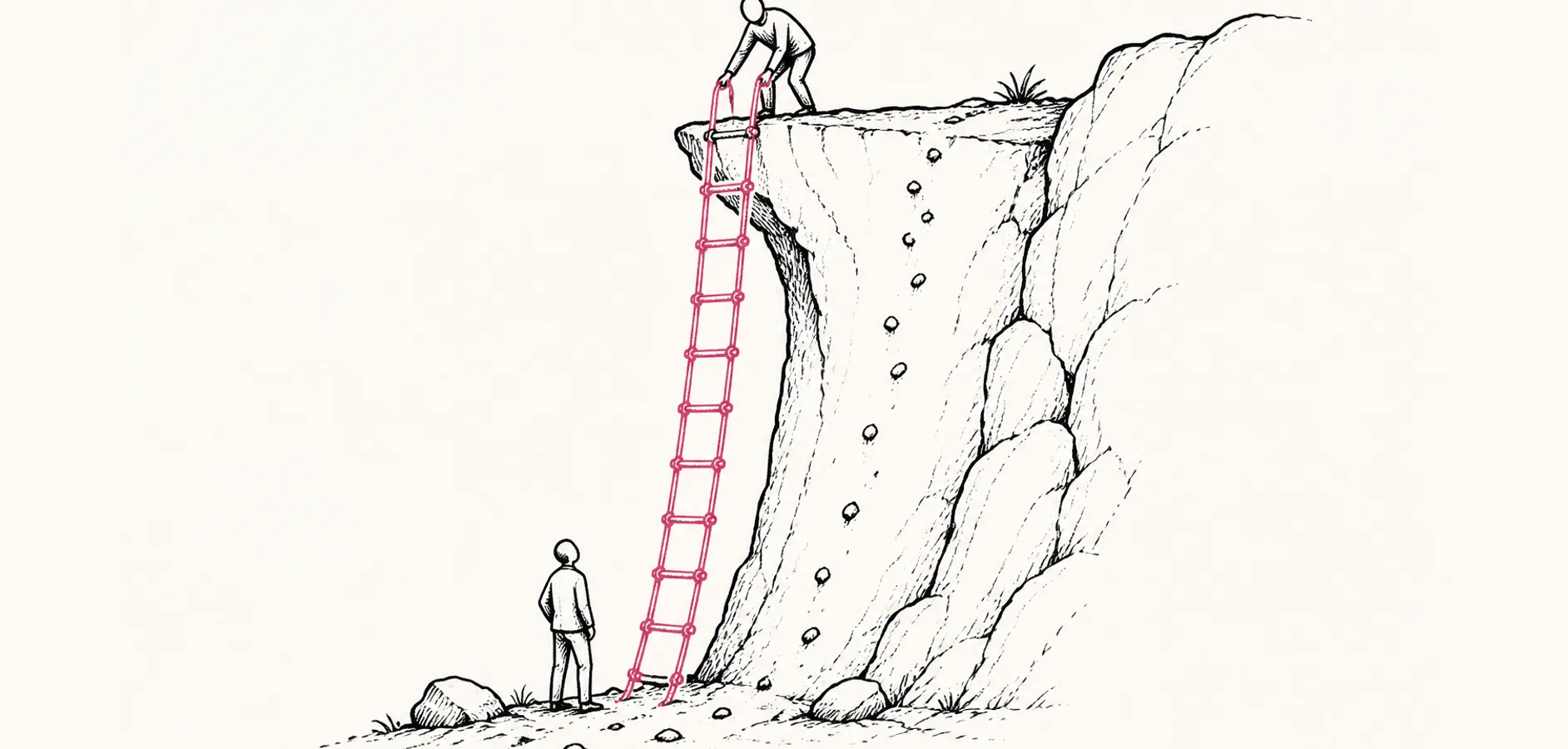
I've been the first engineer, the fifth manager, and the executive holding the pager when a two-person startup's scrappy habits stopped working at two hundred people. Hired badly more than once, and learned the hard way what the bar actually has to be. Shipped the wrong thing quickly, the right thing too slowly, and eventually noticed those are the same failure wearing different clothes.
None of that's a reason to trust me. The reason is I still do the work. Running engineering at Ada, sure, but also building a dozen small products on the side. Not a hobby. An engineering leader who stops shipping starts giving advice they can't defend anymore.
tinycto exists because most engineering-leadership writing is either a war story with no principle attached, or a principle with no scar tissue behind it. I got tired of choosing. Every lesson here is the version I'd actually hand a new lead the first time something breaks on their watch.
The long way here
I was born in 1976, and by the time I was a teenager the computer was the one room in the house where things made sense. QuickBasic, then BASIC on whatever machine I could get near, then Linux, Perl, and shell scripts held together with stubbornness. At night I dialled into BBSes and learned that a stranger's code could teach you more than a classroom, if you were willing to sit there and read it.
In 1996 my parents lost their business.
I don't have a clean story about what that did to me. I know that a year later I failed a French class at CEGEP, the first academic failure of my life, and instead of taking it again I walked out of school entirely. One failure and I was gone. It took me years to see how little that had to do with French.
By 1998 I was living in a beat-up Toyota Tercel. During the day I went to Future Shop (the electronics chain, long gone now) and used the demo computers on the floor to break into systems I had no business being in. That was my entire infrastructure: a car, and machines that weren't mine.
Then two years driving a truck for Iron Mountain, moving boxes of other people's records in and out of warehouses.
In 2000 I took a job on the technical support phones at Bell Canada. High-speed internet over DSL was brand new, customers were confused, and the troubleshooting tools were worse than the problems. So between calls, and sometimes during them, I built my own intranet to diagnose faster.
A technology manager named Serge Joly found out and told me I couldn't just do that.
Then he offered me a job in his department.
I owe Serge a great deal, and the job was the smaller part of it. The bigger part was something he said that was so obvious I was embarrassed nobody had said it before: nobody can read your brain. Learn to speak. I had lived my whole life inside my own head, where the answer was already clear and the only problem was everyone else being slow. Serge made me see the slowness was mine. If an idea never left my head in a form someone else could pick up, it didn't count. He taught me to put my thinking outside myself, where other people could use it, and every job I've had since has run on that.
In 2003 I finagled my way into an interview for an operations manager role at TELUS, which was opening a new call centre in Montreal. I got the job. It then took them eighteen months to find a general manager to run the place, and for those eighteen months somebody had to do that job anyway. I learned everything I could, as fast as I could, mostly by reading. Stacks of books, on every subject I thought might keep me from being found out. A college dropout with a pile of library books, running a call centre.
In 2006 TELUS packaged me out. It was the first time I learned that you can do a good job and a company can still pay you to leave quietly. It felt like a verdict. It was a line in a spreadsheet, and I happened to be the line.
That same year I joined Zero-Knowledge, the almost mythical Montreal company that later became Radialpoint. I stayed nine years and grew from manager to director. I also learned the lesson I most wish I'd learned cheaply: playing the hero does not scale. Being the one who fixes it himself felt like leadership. It was a bottleneck with a good attitude.
And it cost more than the job. I had been treating work and life as a balance, as if they sat on a scale and I could always borrow from one side to pay the other. They don't sit on a scale. They feed each other or they drain each other. I was a bad husband, which made me a worse employee, which got me packaged out a second time, and I came very close to losing my marriage on the way. I'm not proud of that sequence. I teach from it anyway, because it's the most expensive thing I know.
In 2015 I rebounded to Shutterstock as director of music technology. A couple of months later I was in the broader senior leadership group as VP of Product Engineering, and I built a tech centre in Montreal from zero to a hundred talented people. That's where I learned what scale asks of you, which is mostly to stop being the person with the answer.
In 2018 I joined Lightspeed before its IPO, and went through the IPO with it. The product and technology org grew from 125 people to more than 600, across eighteen acquisitions. I learned about politics, about technical debt that is real rather than the kind people complain about in retros, and about managing managers of managers of managers, where your words arrive three layers down sounding like somebody else said them. Serge's lesson came back hard there. Learning to speak wasn't enough anymore. I had to be understood by people I would never meet.
In 2021 I joined CircleCI as SVP Engineering, a job I'd have called mythical a few years earlier, at a company I'd have said the same about. I have never seen that much engineering talent in one place.
In 2026 I joined Ada as SVP Engineering, which is where I am now.
I didn't get here on a path. I got here on people who gave me a chance when the evidence said they shouldn't, Serge first. tinycto is my attempt to do for somebody else what he did for me, without them having to live in a car first.
Currently shipping
Small batches, or nothing else matters. I don't just teach that, I test it against myself: twelve products, most of them solo, most of them small enough to actually finish.
Étincel
AI publishing platform.
OpenAtelier
Manuscript editing platform.
Manuscrit
Book extraction and manuscript generation.
Glyfo
Live design token management.
OpenPostern
SaaS vendor security monitoring.
OODLC
Team outcomes delivery platform.
Agent-Led Strategy
Autonomous growth operations sandbox.
Zombie Rebuild
Website refresh service.
Tiny Etiquette
Thoughtful products around modern manners.
Society of Mysteries
Mystery party experience kits.
AIStoryHub
AI-powered writing platform.
DottedBlock
AI performance intelligence platform.
“Did the last thing you shipped actually work, or did you just finish planning it and move on?”
That question is the whole argument behind The Output Trap: organisations reward the appearance of progress because it's easier to measure than the outcome itself. Most of what's on this site is downstream of taking that question seriously.
Say hello
Or start with lesson one. If you're carrying the CTO job alongside everything else, see the residency.